Monday, February 20, 2012

Solving a Lawn Problem in San Diego, California, Part 3

So now I expect you are waiting to see the results of George's efforts to find a lawn that requires much less water than any of his previous lawns.

To summarize what is in Parts 1 and 2, in blog posts below:
"The main reason for replacing the grass was its water consumption and here in Southern California (San Diego) we have the highest cost rates for water from entire United States. So the motivation was strong to find alternatives for customers that still want natural green in their backyards, or go to some artificial solution."
And the results:
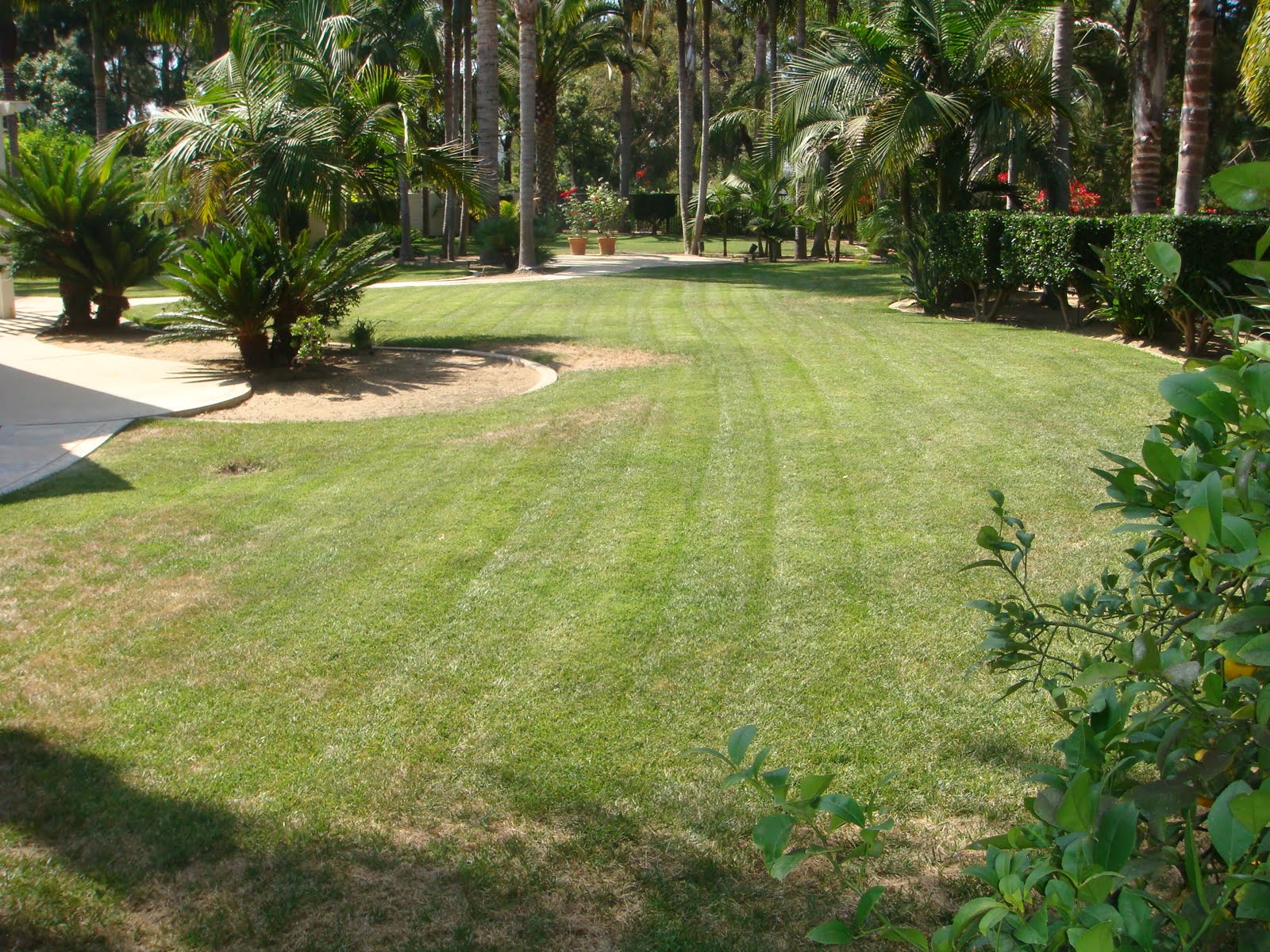
"The grass was seeded Oct 1st, 2011. To date the results are OUTSTANDING, from looks to water consumption. First month water usage was 42% lower than same time last year regardless that I watered more than normal to get the grass going, and the past 2 months the water consumption was 58.6% lower than same time last year...Wow !! Very Very impressed and a happy customer."

the new front yard lawn

 
close-up

part of the back yard

more of the beautiful backyard

Want some Enviro-Turf seed for yourself? Visit the Bluestem Nursery website.

Saturday, February 18, 2012

Solving a Lawn Problem in San Diego, California, Part 2

George B, a customer in San Diego, has reported great success with our Enviro-Turf, a low maintenance lawn seed. In the previous post (see below) he talks about his motivation behind the change to Enviro-Turf, and shows pictures of his old lawn.

George also sent us some great pictures of the transformation of his 7,000 sq ft lawn, and explained the steps he took to get rid of the old lawn:

1. Kill old lawn with Roundup, about 3 applications.

2. Wait for lawn to be dry completely


3. Remove dead lawn (by hand to about a depth of 8 to 10 in)

4. Let dead lawn dry


5. Rototill soil and let it dry

6. Remove by hand old grass roots without any soil (I had about 1.5 ton of dead old grass and very little soil)

7. Add about 2" of top soil and rototill soil to about a depth of 6 inches.


8. Rake and final grade

9. Apply "Enviro-Turf Seed"


10. Water as needed to keep the soil moist

Current lawn pictures in the next post.

Thursday, February 16, 2012

Solving a Lawn Problem in San Diego, California, Part 1

Last year George B contacted us because he felt that our Enviro-Turf lawn seed might be the solution to his desire to have a less thirsty lawn in his hot dry climate in San Diego, California.

He sent us this info regarding his motivation behind his change to our Enviro-Turf:
"San Diego has one of the highest water usage rates in the country and for the past three years it has been going up and up much more than the inflation rate. Just in the past 12 months the rate went up two times. As an example this past December water usage was reduced by 56% over same period a year before, but the cost for water usage was reduced by 5.2% ONLY. Can you imagine how much would it have been if it was not for the 56% reduction in consumption?

But the story does not stop there. As the cost over the past 23 years has been going higher and higher, I replaced the entire grass 2 times from the original one (yours being the third time from the original during this period), and I modified the sprinklers 3 times with improved and more efficient type of heads. All in vain because no matter how much the reduction in water (few percentages) the costs still continued claiming

I considered at one point putting in artificial turf but nothing is like natural grass. So the solution had to be a grass that is still a grass, looks good, maintains easily, but most important, has a dramatic reduction in water usage. Enviro-Turf Lawn was the answer, and based on almost 5 months, I believe I hit the "jack-pot" with your product."

This was what the thirsty lawn looked like, despite regular watering:


The next post will show the steps he took to convert to Enviro-Turf and what his new lawn looks like.

Sunday, January 15, 2012

Gardening at High Elevation, in New Mexico

by Sara Douglas Scott


Gardening at 5000 feet in elevation in Albuquerque, NM presents some unique challenges:
· Negligible precipitation: 7-8 inches on average annually.
· Radical daily temperature fluctuations. A 40 degree swing in a day is normal, but up to 60 degree fluctuations occur from time to time.
· Intense sunlight and heat: summer temperatures of at least 90 to 100 degrees and blinding UV year-round.
· Soil lacking organic matter.
· Fiercely dry winds.
In my experience, grasses take this environment in stride. Not surprisingly, Albuquerque and much of New Mexico were once vast grasslands. Of the 29 ornamental grass genera offered by Bluestem, 20 of them (species thereof) are recommended in our New Mexico-specific gardening books and nursery catalogs/websites (see list below). The remaining 9 require either cool temperatures, significant moisture, shade, or acidic soil, or a combination thereof, conditions that do not occur naturally in most gardens here. New Mexico is a large state with many varied microclimates, however, and the intrepid gardener in a mountain or riparian setting, where it is cooler, moister, and/or shadier, might find success growing these more tender grasses (though some extra TLC could be required).

part of Sara's beautiful garden
With the exception of native New Mexican plants, ornamental grasses are the most reliable and hardy group of plants that I have used in my garden. One must remember, however, that they are not (typically) native and will require more thought as to location in the garden and water needs. Before ordering, be sure to consult local gardening resources (books, websites, nurseries, extension services, etc…) as to the particular species and its use and care. If you provide for the needs of the particular grass, however, you will be rewarded with year-round textural interest, a beautiful visual counterpoint for your perennials, and a lovely performance as the grass dances in the wind.

Ornamental grass genera, species thereof, known to grow in New Mexico or parts of New Mexico are (check local resources on particular species):

Thanks to Sara for submitting this information.


Saturday, August 27, 2011

Growing Grasses in Calgary, AB - Part 1


Calgary's Gardeners Deal With a Very Challenging Climate
Fortunately there is an ample selection of grasses for the challenging conditions in the Calgary area, as proven both by controlled hardiness trials at various universities and by the more prosaic trial-and-error methods used by nursery growers and home landscapers.

Below are descriptions of six of the best grasses for the Calgary area. A list of specific grasses will follow in a separate post.

Calamagrostis x acutiflora ‘Karl Foerster’ (Feather reed grass): This hardy, narrow and tall (up to 2 M), cool-season grass grows to its fullest potential in open, sunny areas with extra water during dry spells. However, it is very adaptable and can also be grown in partial shade in a variety of soil types and moisture levels. A single ‘Karl Foerster’ plant makes a striking specimen, but they can also be used to more dramatic effect in greater numbers. A swath of them planted along a border becomes a kinetic weathervane as their upright flowers dance in a breeze.
Follow this link to view further info about "Calamagrostis Karl Foerster" on our website.

Deschampsia cespitosa (Tufted hair grass): In terms of growing conditions, the many forms of Tufted hair grass are similar to ‘Karl Foerster,’ and the two grasses are often planted together. Boasting names such as ‘Bronze Veil,’ ‘Gold Veil,’ and the smaller ‘Gold Dew,’ they reveal Deschampsia’s versatility and charm. Like ‘Karl Foerster’ they start blooming in late June and their flowers persist into winter. Their blooms are large but are so finely textured that they resemble a sublime haze of gold floating above foliage. Both ‘Karl Foerster’ and the green-leaved varieties of Tufted hair grass are great choices that can hold their own against Calgary’s winters.
Follow this link to view further info about Deschampsia on our website.

Carex muskingumensis (Palm sedge) and Luzula sylvatica (Greater wood rush): Even though much of Calgary is dry and sunny, many shady areas occur around buildings and taller vegetation. These niches that have lower light levels are appropriate places to plant Palm sedge and Wood rush. Neither plant is a true grass, but both are good choices for handsome, winter hardy plantings.
Palm sedge (up to 1 M tall) is adaptable, but in natural conditions it favors moist (even wet) areas when it is growing in full sun; in shadier locations it tolerates drier conditions. It is often used in landscaping to display its palm-like foliage which nicely complements perennials with large leaves such as Hosta.
Wood rush is a slow-to-establish small plant that is useful for lightly to moderately shaded areas. Although some protection from winter winds is helpful for reducing dieback of the tips, it is somewhat amazing that Greater wood rush maintains its green color year-round. Also, once it settles in and its roots spread, wood rush is a very tough plant for shade. Its fibrous root system allows it to become a weed-proof groundcover that can handle a fair amount of drought (larger plants are produced if the soil around them isn’t allowed to dry out).
Follow this link to view further info about Luzula sylvatica on our website.

Schizachyrium scoparium (Little bluestem): Native to mixed grass prairie habitat, Little bluestem (50-100 cm tall) is an excellent choice for just about any sunny garden in Calgary. Its fountain of narrow leaves is appealing year-round. The most commonly grown variety – both for hardiness and ornamental qualities – is ‘Blaze,’ whose name conjures an image that captures its fall colour. For a combination that will produce decades of enjoyment, plant large drifts of Little bluestem around groupings of Pinus flexilis (Limber Pine), which grows wild in this region.

Miscanthus sinensis (Chinese silver grass and various other names): If you took a survey of what ornamental grass first captured the public’s attention, the majority would probably say Miscanthus – this wouldn’t be surprising, given Miscanthus’s stunning visual presence and its physical stature, which is closer to shrubs than perennials. Its various cultivars and species come in a range of sizes but they tend to be medium to large. To grow the best specimens it is important to consider micro-climates: The ideal position is a sheltered area that receives at least six hours of summer sun; a good location would be near a southwest-facing wall that reflects extra sunlight in summer and retains some radiant heat in winter. All of the many varieties of this grass are quite attractive, but Miscanthus sinensis var. purpurascens merits special mention: It is winter hardy, its reddish-green foliage and fall color are alluring, and its smaller size allows it to be mixed in with other perennials without overwhelming them.

Thursday, April 28, 2011

Planting Our Bare Root Plants & Plugs


Many of our customers order the bare root Miscanthus plants, particularly Miscanthus Giganteus. Just in case you don't know how to plant it, I have a picture of one below. The green line indicates the soil level. There should be a point where the stalk changes from light to dark. That is the previous soil level. So try to plant it to approximately the same depth again.


For planting the plugs and other bare root plants, we have a video. Sorry it is not as crystal clear as we would like it to be. It became unclear in the upload to YouTube.